Concept design by Medeiros Web Design. Back Roads Chiropractic is a fictional business.
Your care plan, visit by visit.
Nobody here is sold a package of forty visits. You get a short plan at the first visit, a check at the third, and a clear point where you stop coming.
A usual plan for a new problem
| Visit | When | What happens | Time |
|---|---|---|---|
| 1 | Day one | History, exam, a first adjustment if it is safe, and two or three stretches | About an hour |
| 2 | Two or three days later | How did you feel after? Adjust again, and check the stretches | 15 minutes |
| 3 | End of the first week | The progress check. Better, the same or worse, measured the same way as day one | 20 minutes |
| 4 and 5 | Second week | Further apart now. Strengthening exercises are added | 15 minutes each |
| 6 | Third week | A last check. Most people are done here, with a sheet of exercises to keep | 20 minutes |
If visit three shows no change, we stop and send you for a scan or to another kind of doctor. That is the rule, and it is written on your plan.
What an adjustment is
A joint that has stopped moving the way it should gets a quick, small push in the direction it is stuck. That is all. It takes about a second.
- The pop. It is gas leaving the fluid in the joint, the same as cracking a knuckle. No pop does not mean it did not work.
- How it feels. Usually like pressure, then relief. Some people are a little sore the next day, like after a workout.
- What it does not do. It does not put a bone back in place. Bones do not go out of place. It gets a stiff joint moving.

Five ways we work
Dr. Beck picks from these by age, build and what the joint will take. Ask for the gentle ones if a twist worries you.
Hands-on adjustment
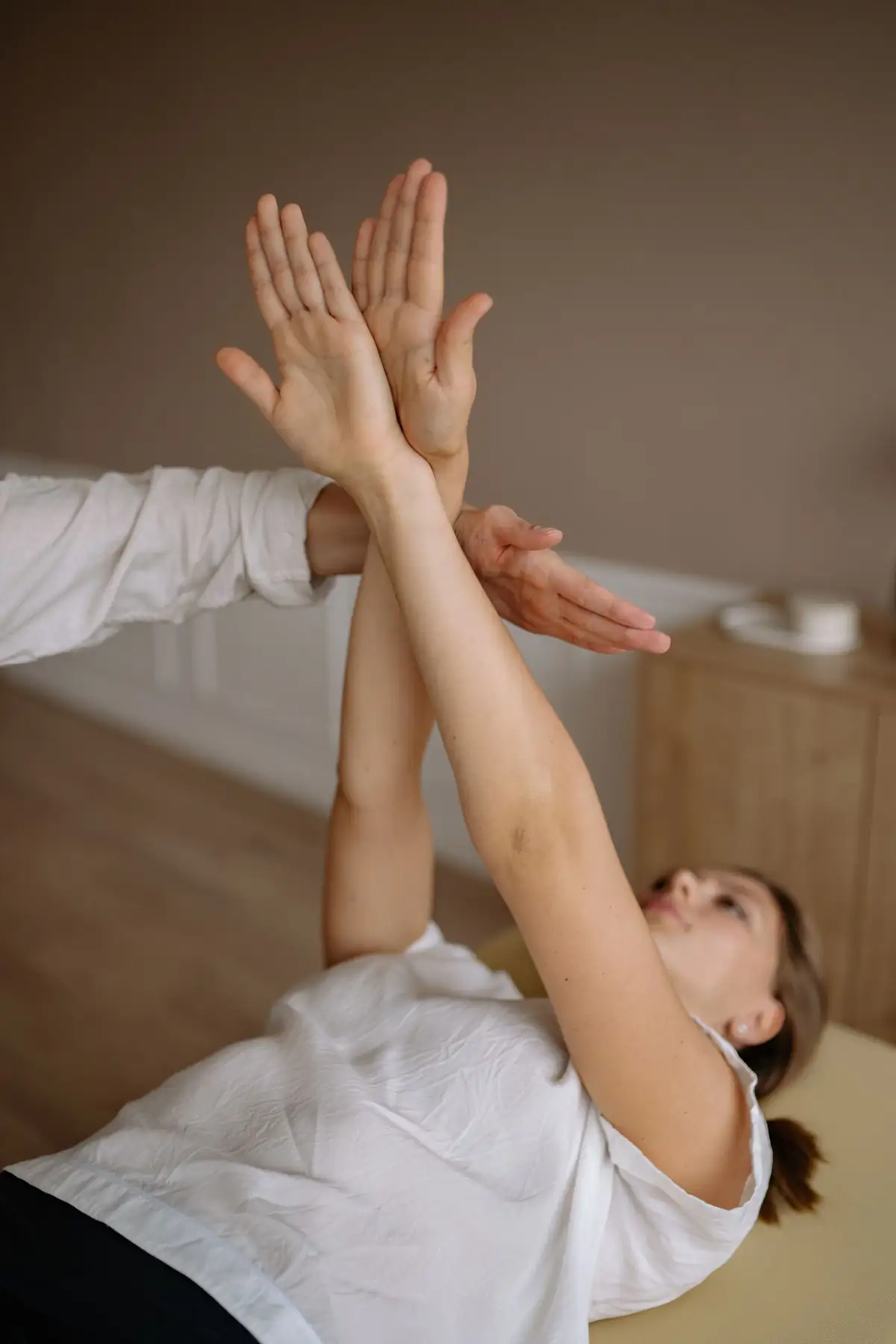
The classic. A short, quick push by hand, with you lying on your side or your front.
Drop table
A section of the table gives way an inch as she pushes, so less force is needed. Good for low backs and for pregnancy.
Hand tool
A small spring-loaded tool taps the joint with no twisting at all. Used for older patients, children and sore necks.
Soft tissue work
Slow pressure on tight muscles and knots, a few minutes before or after the adjustment.
Stretch and strengthen
The part that lasts. Exercises for the muscles that hold the joint where it belongs.
Tell us these at the first visit
Tick the ones that apply, and say so when you come in. Each one changes how we treat you.
After an adjustment
- Walk for ten minutes. Around the square is about right. Movement helps the joint settle.
- Drink water and skip the heavy lifting for the rest of the day.
- Ice, not heat, if you are sore that evening. Fifteen minutes, with a cloth between the ice and your skin.
- Do the stretches. People who do them need about half as many visits.
- Call us if pain shoots down an arm or a leg, or if anything goes numb.
When you are done
You are done when the pain is gone or steady at a level you can live with, and you can do your own work without flaring it up. For most new problems that is three to six visits.
Some people like to come in once a month after that, the way they see a dentist. That is what the $99 monthly plan is for. It is your choice, and nobody will call to remind you.
Asked about care plans
How many visits will I need?
Most new problems feel better in three to six visits. Old ones that have been around for years take longer, and we tell you that on day one.
Will I have to keep coming forever?
No. Your plan has an end written on it. Monthly visits afterward are something you choose, not something you are told you need.
Do you take x-rays?
Only when the exam says we need one, such as after an injury or when something does not add up. We send you two blocks over for them, and most people never need any.
Does an adjustment hurt?
Usually not. If you are tense about it, ask for the drop table or the hand tool, which use less force.
Start with one visit.
The first visit is $65 and takes about an hour. You leave with a plan, a number of visits and the stretches written down.