Four rooms, and what happens in each.
Every room has its own teachers, its own nap corner and its own door to the playground. Here is what a child does in each one, and what to send from home.
The rooms at a glance
| Room | Ages | One teacher for | Most in the room | A week |
|---|---|---|---|---|
| Sprouts | 6 weeks to 12 months | 4 babies | 8 | $245 |
| Saplings | 1 to 2 years | 4 children | 8 | $225 |
| Oaklings | 2 to 3 years | 8 children | 16 | $205 |
| Pre-K | 3 to 5 years | 10 children | 20 | $190 |
Each room has a lead teacher and a second teacher all day. A fifth teacher covers breaks, so the numbers hold through lunch and nap.
Sprouts
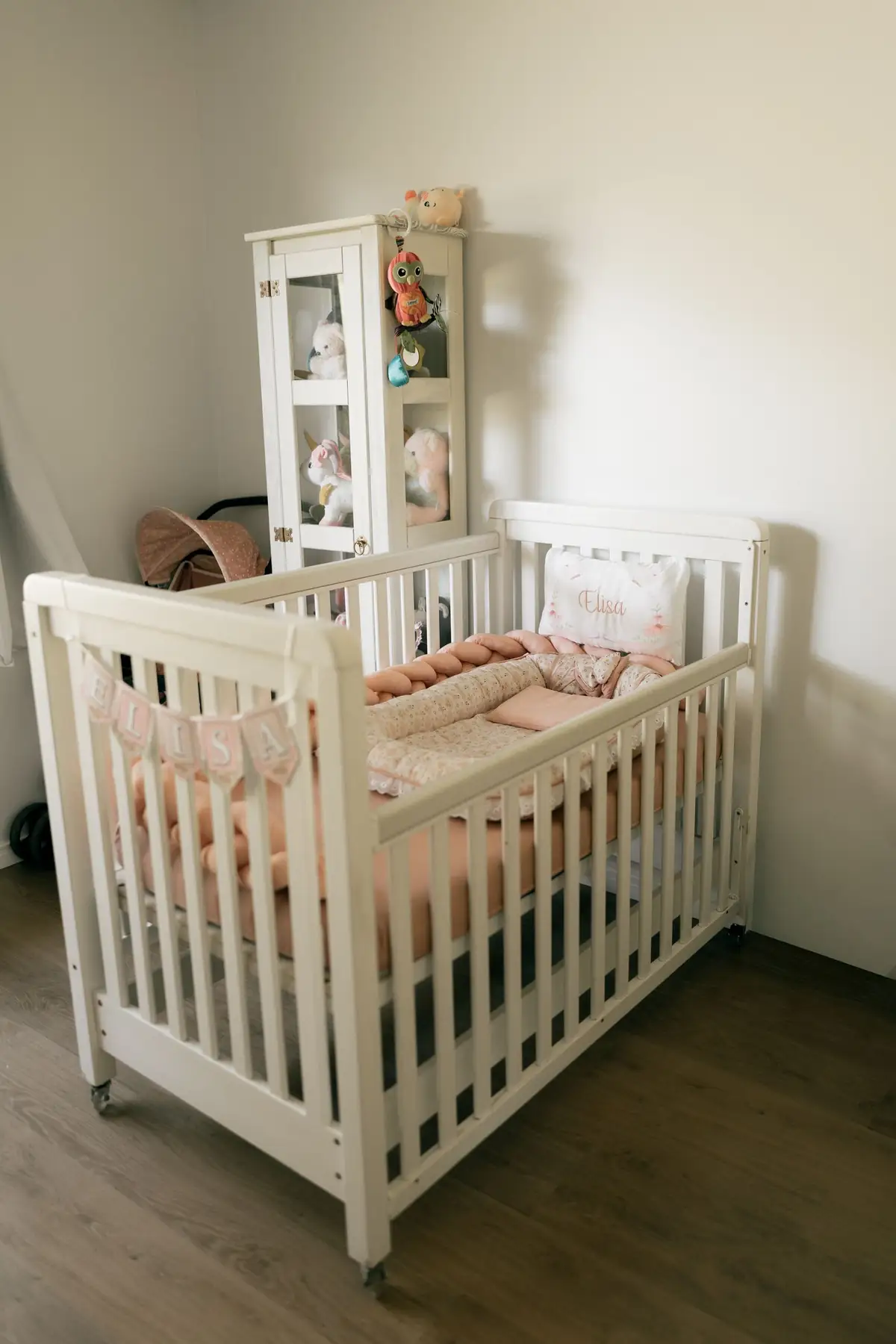
Six weeks to twelve months. A baby's day here follows the day they have at home.
- Your schedule. Bottles and naps happen when your baby is ready, not when a clock says.
- Safe sleep. On their back, in their own crib, with nothing else in it.
- Floor time. Tummy time, mirrors, soft blocks and a lot of being talked to.
- Nursing parents are welcome any time. There is a rocker in a quiet corner.
- A full report. Every bottle, nap and diaper is in the app as it happens.
- Send: labeled bottles, milk or formula, three outfits, a sleep sack, diapers and wipes.
Saplings
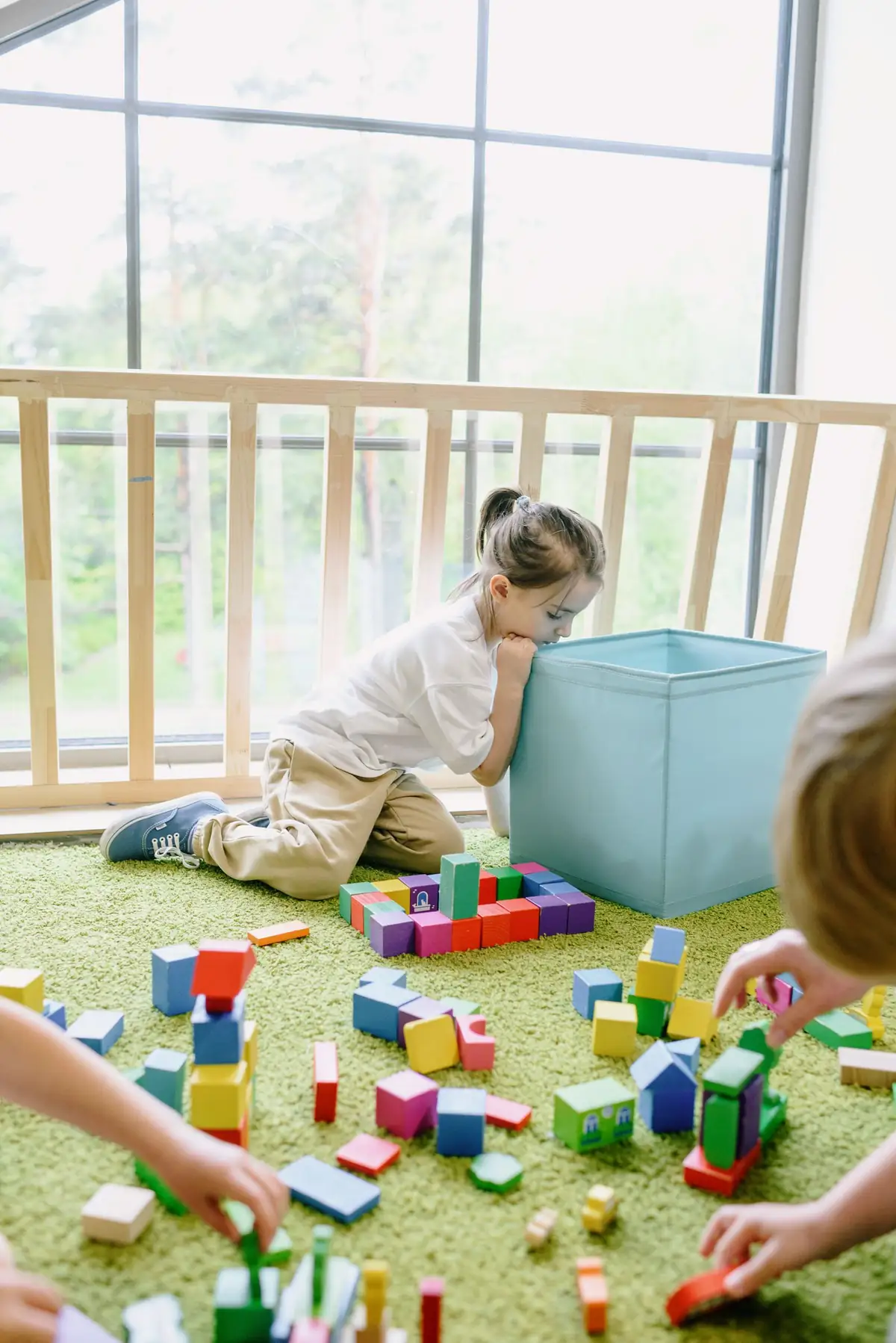
One to two years. Everything is new, and most of it gets climbed on.
- Moving. Walking, climbing, pushing and carrying, indoors and on the toddler yard twice a day.
- First words, and hand signs for more, all done and help.
- Cups and spoons. Messy at first. We do not mind.
- One nap, after lunch, on a cot. Most move to one nap by fifteen months.
- Biting happens at this age. We stay close, step in early and tell both families the same day.
- Send: two outfits, diapers and wipes, a cot sheet and blanket, and shoes that stay on.
Oaklings
Two to three years. The year of "I do it myself."
- Potty training. We follow what you do at home, keep a chart and never rush or shame.
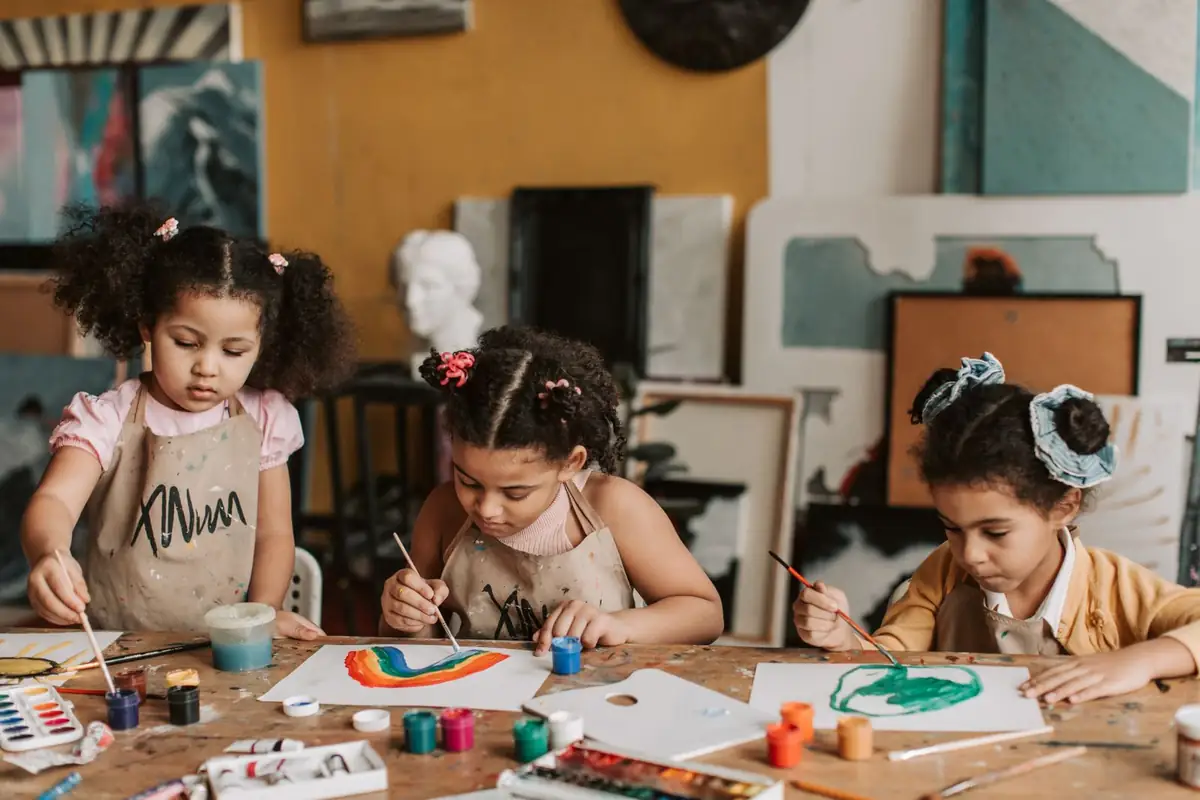
- Art every day. Paint, glue, dough and scissors with a teacher beside them.
- Taking turns. The hardest lesson of the year, practiced all day long.
- Talking. Two words become sentences. We read at least four books a day.
- Outside morning and afternoon, coats on, rain or shine.
- Send: two outfits, three in a potty training week, and a water bottle with a name on it.

Pre-K
Three to five years. Getting ready for kindergarten without giving up play.
- Letters and sounds. A letter a week, and writing their own name by spring.
- Numbers. Counting to twenty, sorting, patterns and measuring with blocks.
- Circle time grows from ten minutes to twenty over the year.
- Jobs. Line leader, plant waterer, snack helper. Every child has one each week.
- Two outings a year: the pumpkin patch in October and the fire station in May.
- A readiness note goes home in January and in May, for you and the kindergarten teacher.
Moving up a room
Children move when they are ready, not on their birthday. It takes about two weeks.
- A teacher suggests itWhen your child is doing most of what the next room does.
- We talk with youAt pickup or by phone. You know your child best.
- Three visit daysA morning in the new room, with a teacher they already know.
- Moving dayAlways a Monday. Their cubby tag and nap things move with them.
Asked about the rooms
Can siblings see each other during the day?
Yes. The rooms share the big playground at 10:30, and an older child can visit the baby room with a teacher.
My two-year-old still takes two naps.
That is fine. A teacher will rock or sit with them for a short morning rest for as long as they need it.
Does Pre-K follow the school calendar?
No. We are open all year. In summer the older children do water play, gardening and a weekly theme.
Do children have to be potty trained for Pre-K?
Nearly. We help with the last stretch, and accidents are handled quietly.
Come see the rooms.
A tour takes half an hour. Bring your child and stay to play for a while.