Concept design by Medeiros Web Design. Iron Shoe Farrier Service is a fictional business.
Shoes, trims and what your horse needs.
Not every horse needs iron. I would rather trim a sound barefoot horse for $50 than nail on shoes it does not need. Here is how I decide, and what each job is.
Barefoot or shod?
| Your horse | Usually | Why |
|---|---|---|
| Pasture pet or light trail horse on soft ground | Barefoot | The hoof wears about as fast as it grows |
| Ridden on gravel roads or rocky trails | Front shoes | The fronts carry most of the weight and wear first |
| Worked hard: ranch, roping, long trail miles | Full set | The hoof wears faster than it can grow |
| Thin soles, or sore after every trim | Shoes, maybe pads | Protection while the sole thickens |
| Driving horses on pavement | Full set, with grip | Steel slides on asphalt without it |
| Foals and yearlings | Barefoot | Trimmed often, so the legs grow straight |
A full set, step by step
- Watch the horse walk. Before I pick up a foot, I see how each one lands.
- Pull the old shoes and clean the foot.
- Trim. Nippers take the wall down, a knife cleans the sole and frog, a rasp makes it level.
- Shape the shoe at the anvil to that foot. No two are the same, even on one horse.
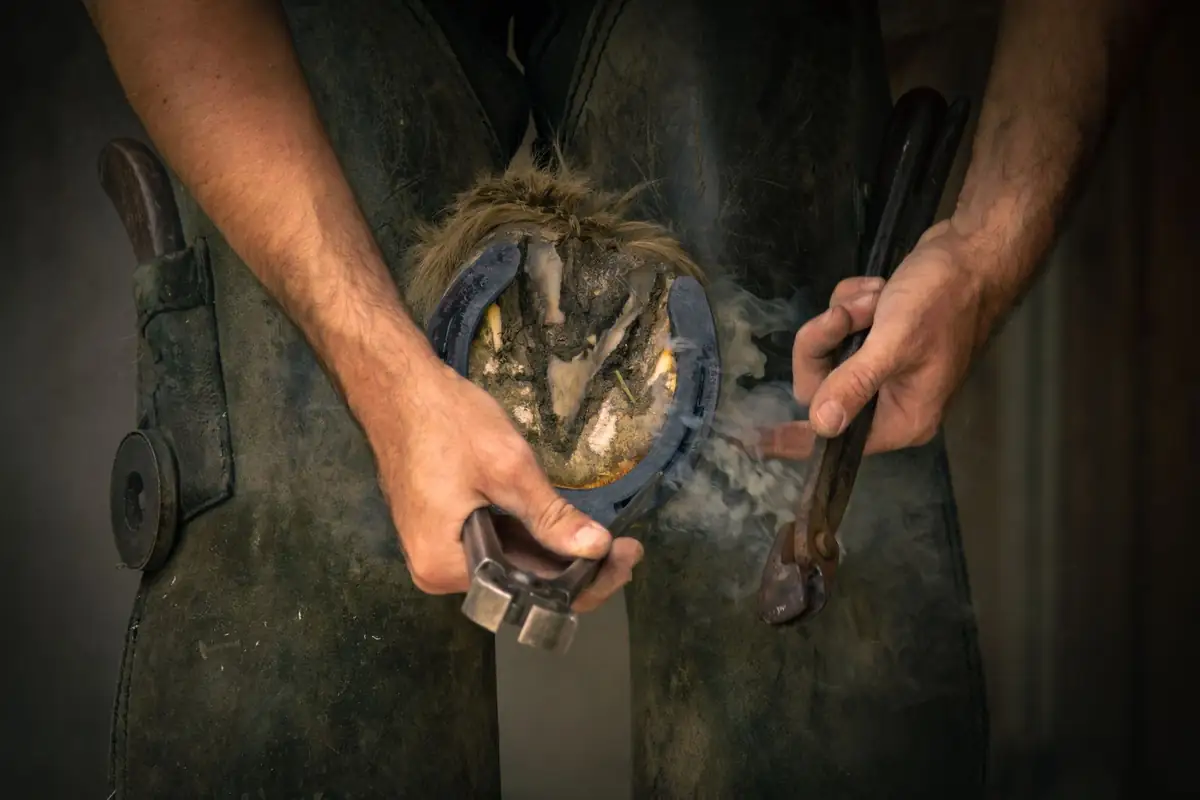
- Hot fit. The hot shoe is set on the hoof for a second. The scorch mark shows me where it touches.
- Nail and clinch. Six or eight nails, bent over and filed smooth.
- Watch the horse walk again.
A full set takes about an hour. The smoke from a hot fit smells bad and does not hurt. Hoof wall has no feeling, like a fingernail.
Other shoes and extras
- + $30
Borium or studs
Hard grip welded on for ice, pavement and parade routes.
- $160
Rim or traction shoes
For barrel horses and ropers who need to dig in.
- $185
Aluminum shoes
Light, for show and performance horses. They wear out in one cycle.
- + $30
Leather or plastic pads
Between the shoe and the sole, for bruised or thin-soled feet.
- + $10
Trailers or squared toes
Small changes that help a horse that hits itself or drags a toe.
- From $220
Glue-on shoes
For a hoof wall too broken to hold a nail.
Sample prices for this concept site. Draft horses and mules add $20.
The cycle through the year
- SpringFeet grow fastest on new grass. Hold to six weeks, and watch for founder in easy keepers.
- SummerHard ground and stomping at flies chip walls and loosen shoes. Fly spray on the legs saves nails.
- FallGood footing and steady growth. The easiest feet of the year.
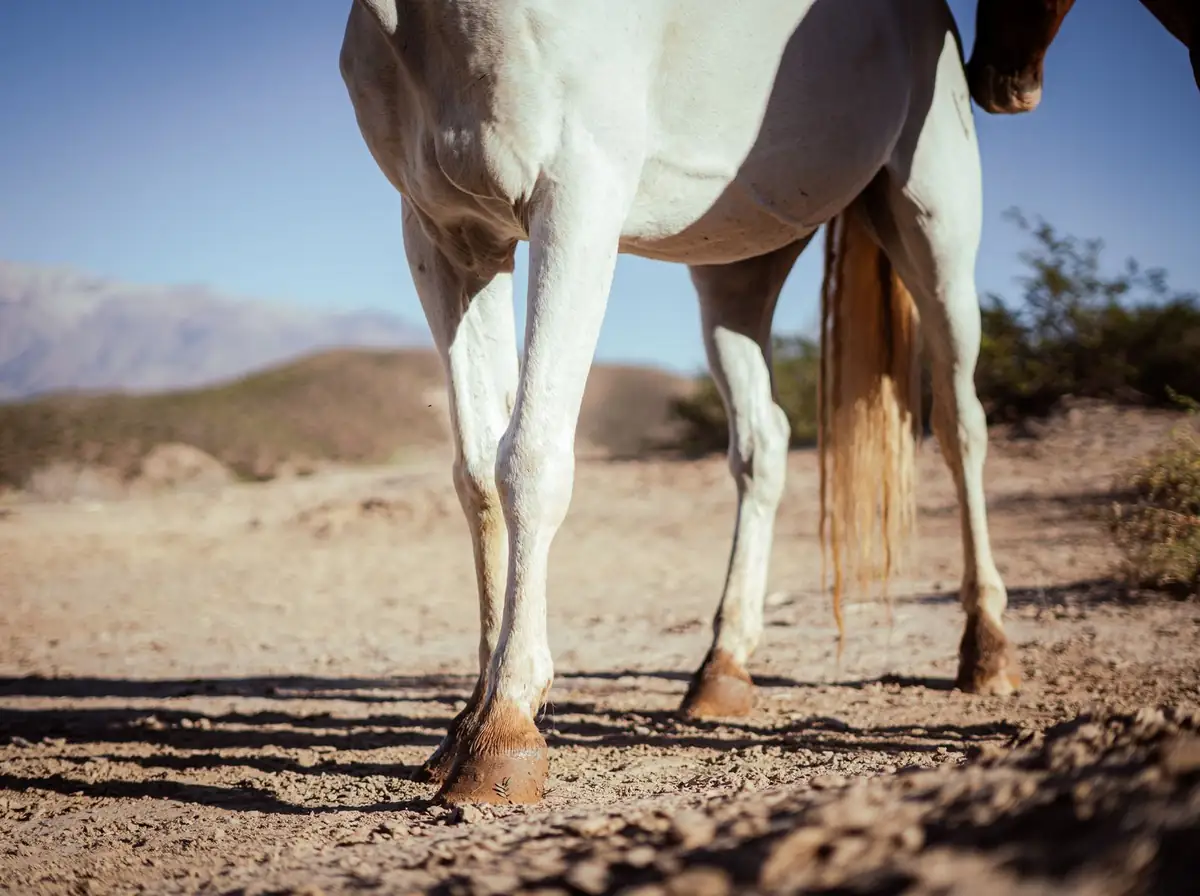
- WinterGrowth slows. A barefoot horse can go eight weeks. Pull shoes on horses that are turned out and not ridden.
Mules, donkeys, drafts and minis
- Mules have narrow, upright, very hard feet. They are trimmed to their own shape, not a horse's.
- Donkeys founder easily and hide it well. Every eight weeks, at least.
- Draft horses take bigger shoes, more time and a second pair of hands. A full set is $160.
- Miniature horses are trimmed for $40, on my knees.
- Goats I will do at $10 a head if I am already in the barn.
Is it time? Check the feet
Tick any that are true. One is enough to text me.
Questions about shoes and trims
Do shoes hurt a horse?
No. The nails go through the wall, which has no nerves. A horse that flinches is telling me a nail is too close, and it comes straight out.
Hot or cold shoeing?
Hot, when the barn allows a forge. The fit is better and the shoes stay on longer. In a hay barn I fit cold.
Can I pull my horse's shoes for the winter?
Yes, if it will not be ridden on rock. Give the feet two weeks to toughen before you ride.
How long does a set of shoes last?
The steel often lasts two cycles, which is what a reset is for. The trim underneath still has to happen every six weeks.
Not sure what yours needs?
Text me a photo of each foot from the side and from the bottom. I will tell you what I see.