Coat care at home.
What happens in the six weeks between grooms matters more than what happens on our table. Ten minutes a week is enough for most dogs.
What your dog's coat needs
| Coat | Dogs like | Brush | Bath | Groomer |
|---|---|---|---|---|
| Short and smooth | Labs, beagles, boxers, pit bulls | Once a week, with a rubber mitt | Every two months | Nails monthly |
| Double | Huskies, shepherds, goldens, corgis | Twice a week. Daily when they blow coat | Every six to eight weeks | De-shed in spring and fall |
| Curly or wool | Poodles, doodles, bichons | Three times a week, to the skin | Every three to four weeks | Every six weeks |
| Long and silky | Shih tzus, yorkies, maltese | Every day if kept long | Every three weeks | Every four to six weeks |
| Wire | Schnauzers, terriers | Once a week | Every six weeks | Every six to eight weeks |
How to brush so it works
Mist the coat
A spray of water or detangler. Dry hair breaks.
Line brush
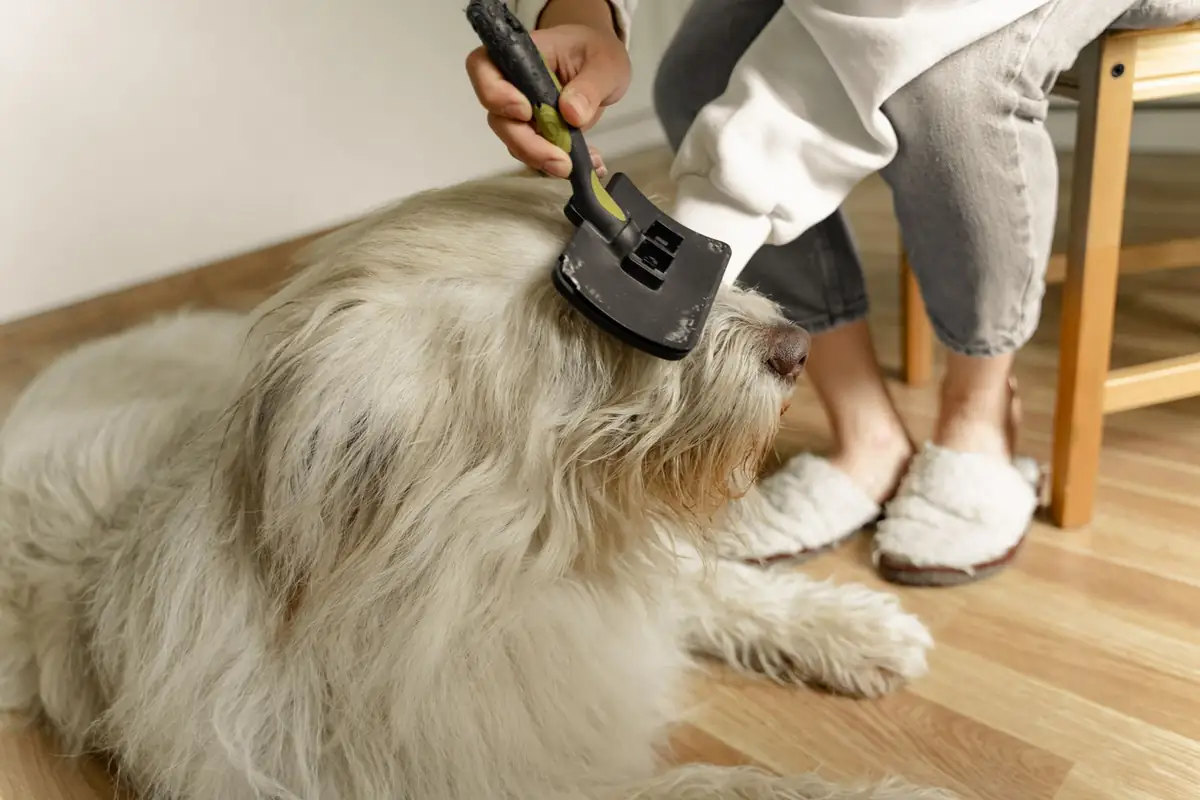
Lift the coat with one hand and brush a thin layer down from under it. Work up the dog in rows.
Start at the feet
And finish at the back. The legs, armpits and behind the ears mat first.
Comb to check
A metal comb should slide from skin to tip. Where it stops, there is a tangle.
End with a treat
Every time. The brush should mean something good.
Three tools, about $30
- A slicker brush: fine bent pins on a pad. For curly, long and double coats.
- A metal comb, with wide teeth at one end and fine at the other. The one that finds mats.
- A rubber curry mitt: for short coats. Use it outside.
- An undercoat rake: for double coats in shedding season.
- Skip: bladed mat splitters and human hair brushes. One cuts skin, and the other does nothing.
- We sell all of these at cost, and show you how to use them on your own dog.
Bathing at home
- Brush first. Water sets tangles into mats.
- Dog shampoo only. Human shampoo is the wrong acidity and dries their skin.
- Lukewarm, as for a baby. Wet to the skin, which takes longer than you think on a thick coat.
- Rinse twice as long as you washed. Leftover soap is the usual cause of itching.
- Keep water out of the ears. A cotton ball in each helps. Dry them afterward.
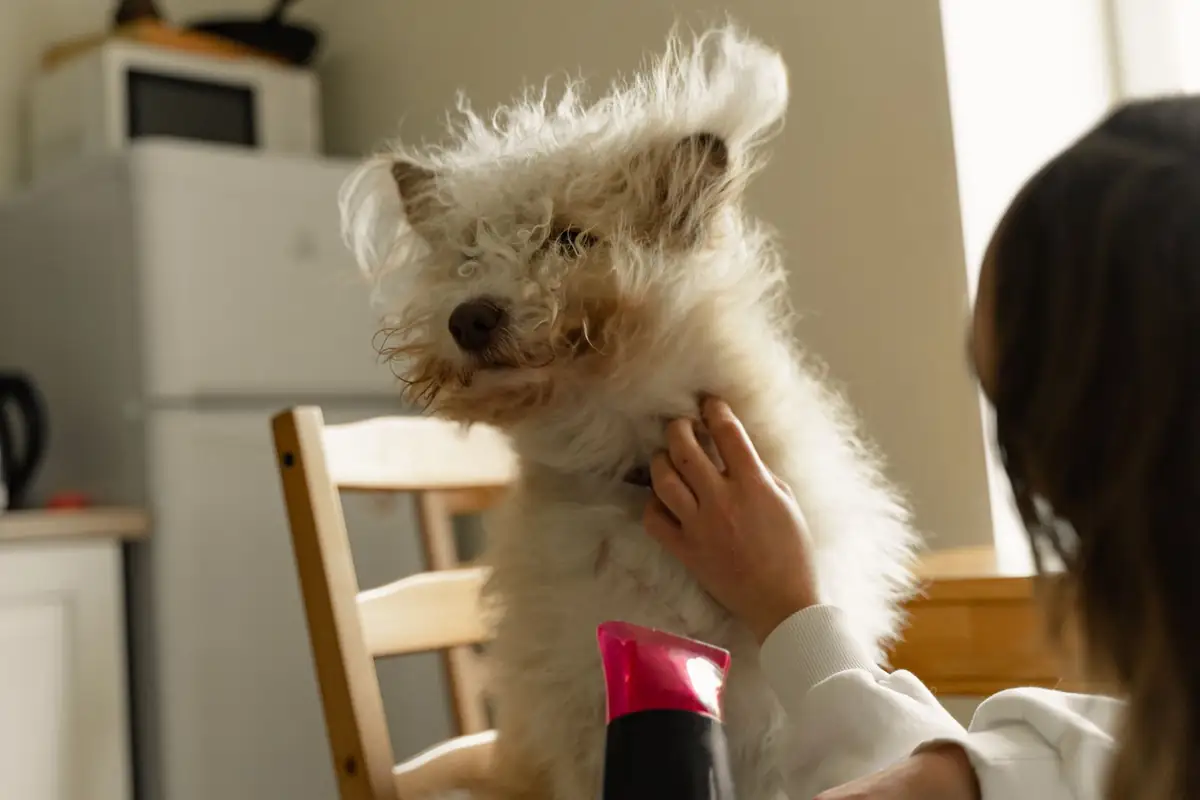
- Dry completely. A damp undercoat smells, and breeds hot spots. Towel, then a dryer on cool.
Nails, ears, teeth and feet
Nails
If they click on the floor, they are too long. Every three to four weeks.
Ears
Look and sniff weekly. Pink and odorless is healthy. Brown or smelly needs a vet.
Teeth
A dog toothbrush and dog paste, three times a week. Never human paste.
Feet
Check between the pads for burrs, grass seeds and ice balls.
Eyes
Wipe tear stains with a damp cloth daily, front to back.
An Ozarks year in dog coats
| Season | Watch for | What helps |
|---|---|---|
| Spring | Mud, the big shed and the first ticks | A de-shed, and a tick check after every walk in long grass |
| Summer | Hot spots, swimmer's ear and burrs | Dry ears after the lake. A shorter cut on curly coats, never a shave on double ones |
| Fall | Stick-tights and beggar's lice in the coat, a second shed | Comb seeds out the same day. Cornstarch loosens them |
| Winter | Dry skin, salt on the paws and mats under sweaters | Fewer baths, paw balm and brushing where the sweater rubs |
Small emergencies
- Skunk Peroxide, baking soda and dish soap. Not tomato juice
- Tree sap Rub in cooking oil, then wash
- Gum Ice it, then crack it off
- Paint Let it dry and clip it. No solvents
- Burrs Cornstarch and a comb
- A tick Tweezers at the skin, straight out
The ten-minute weekly check
Questions about home care
How often should I bathe my dog?
Curly and long coats, every three to four weeks. Short coats, every two months or when they smell. More than weekly dries most skin.
Is it bad to let a dog air dry?
For a short coat, no. For a thick or curly one, yes. The undercoat stays damp for hours, and mats tighten as they dry.
Can I trim my own dog's nails?
Yes. Take a sliver at a time, and stop when you see a pale dot in the middle. Or walk in here Tuesday to Friday, 2 to 4.
What is the mixture for skunk?
A quart of 3% peroxide, a quarter cup of baking soda and a teaspoon of dish soap. Mix it fresh, keep it out of the eyes, leave it five minutes and rinse.
Stuck on a tangle?
Stop in. We will show you on your own dog, and there is no charge for a lesson.