Never lifted? Start here.

Most of our members walked in not knowing which end of the bar to hold. Here is what the words mean, what to do in week one and what nobody tells you.

The five moves everything is built on

Learn these and you can use any gym for life
MoveWhat it isWhat it trainsWhere you start
SquatSit down and stand up, with weightLegs, hips and backA goblet squat with a kettlebell
HingePick something up off the floor. The deadliftThe whole back of the bodyA kettlebell deadlift
PressPush weight overhead, or away from the chestShoulders, chest and armsDumbbells, seated
PullRow weight toward you, or pull yourself upBack and armsA ring row at an easy angle
CarryWalk with something heavyGrip, trunk and everything elseTwo kettlebells, forty feet

Your first month

  1. Week 1

    Learn the room

    Tour, fob and two classes. Use light weights and learn the names of things.

  2. Week 2

    Three sessions

    Squat, press and deadlift, one each day. Write down what you lifted.

  3. Week 3

    Add a little

    Five pounds on each lift. It will feel too easy. That is right.

  4. Week 4

    A habit

    Same days, same times. By now the soreness has gone and the weights have gone up every session.
Gym words

  • Rep. One go at a movement. One squat is one rep.
  • Set. A group of reps done without stopping. Three sets of five is fifteen squats, with rests after each five.
  • The bar. A standard barbell weighs 45 pounds. We also have 35 and 15 pound bars.
  • Plates. The weights that slide on. A plate, said alone, means 45 pounds.
  • Rack. The steel frame that holds the bar at shoulder height, with safety arms to catch it.
  • Spot. Someone standing by to help if a lift stalls. Ask anyone. Everyone says yes.
  • PR. Personal record. Ring the bell by the desk when you get one.
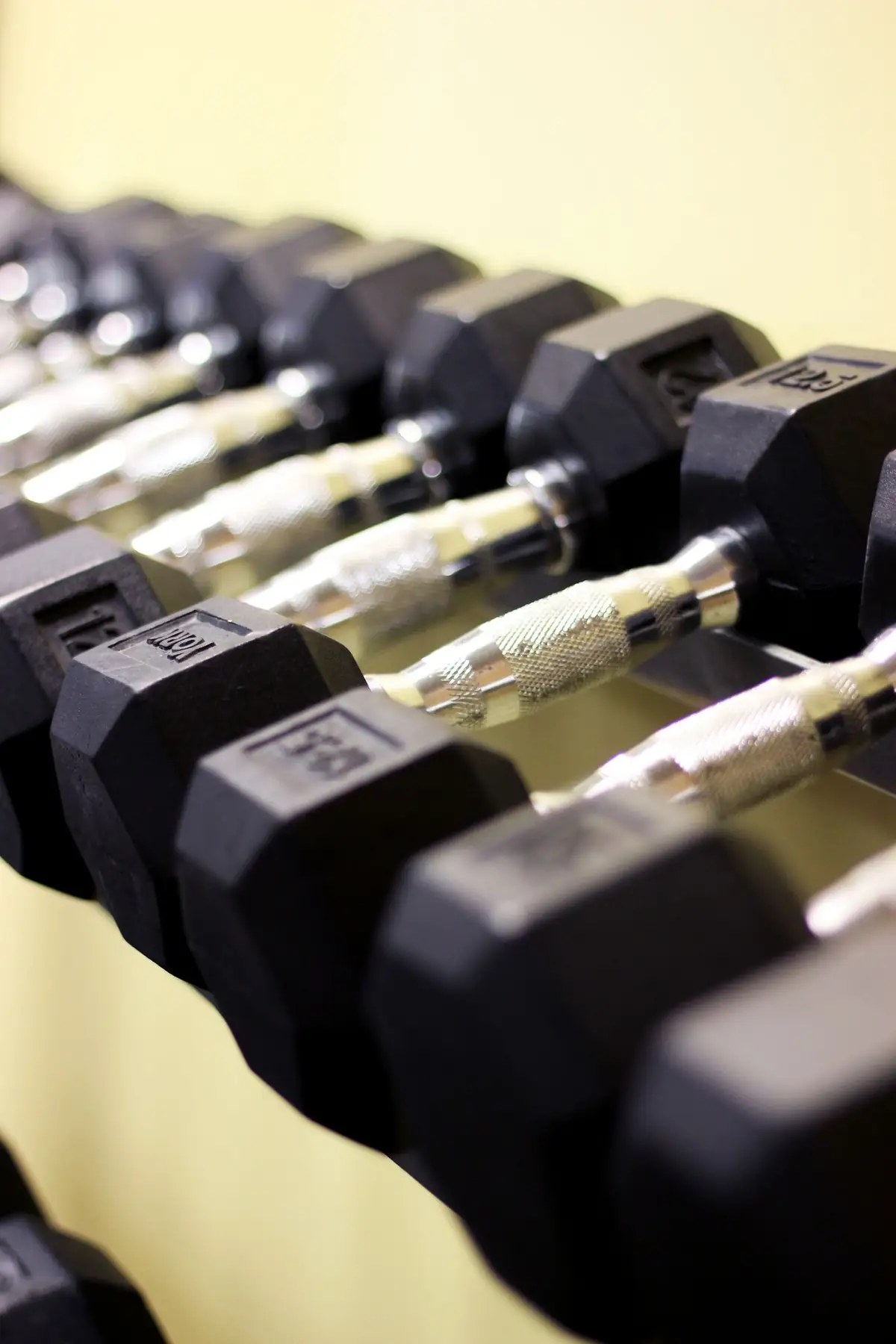
Row of black hexagonal dumbbells with steel handles on a rack

What new people worry about

Everyone will stare.
They are counting their own reps. Truly.
I am too weak.
The 15 pound bar exists for a reason. So do 2.5 pound plates.
I will get hurt.
Lifting has fewer injuries than jogging, when someone teaches you. Someone will.
I do not know what to do.
That is what the first class and the goal session are for.
I am too heavy, or too thin.
Barbells do not care. Both get stronger at the same rate.
I will be the oldest.
Not at 10 AM on a Tuesday.

How to use a squat rack

What you need, and do not

Need

Day one

  • Flat-soled shoes
  • A water bottle
  • A notebook or your phone
  • Clothes you can squat in

Later

Month three

  • Lifting shoes, if you love squatting
  • Your own chalk, though ours is free
  • A belt, once your coach says so

Never

Save your money

  • Gloves
  • A squat pad for the bar
  • Pre-workout powders
  • Anything sold with the word shred
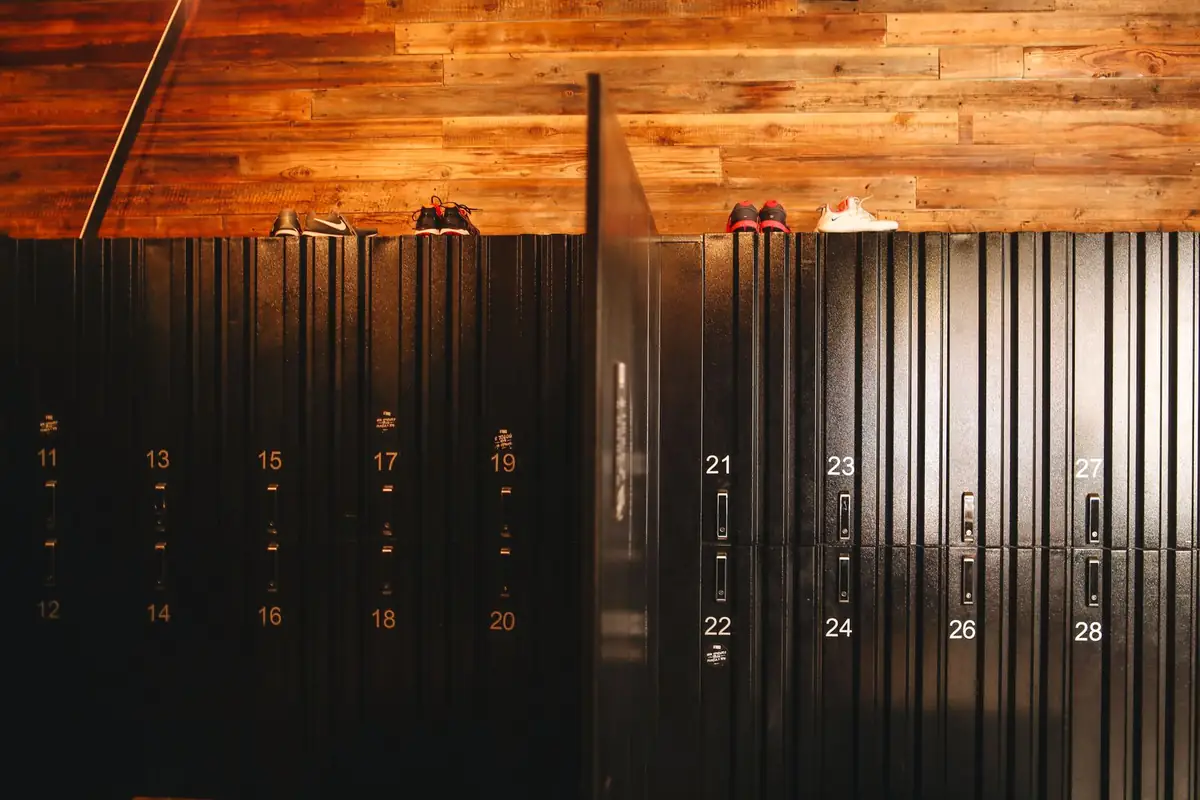
Row of numbered black lockers under a wall of warm wooden planks, with shoes left on top

Walking in the first time

  • The red door. Wave your fob, or ring the bell during staffed hours.
  • The desk is on the left. Say you are new. Someone walks you round.
  • Lockers are straight ahead. Free locks at the desk. Showers and towels through the same door.
  • Quiet hours are 1 to 4 PM on weekdays, and after 8 at night. A good time to practice with no one about.
  • Busy hours are 5 to 7, morning and evening. You may wait for a rack.

Week one, ticked off

Questions from new lifters

How many days a week should I come?

Three, with a day between. Two is fine. Five is too many in the first months.

How long should a workout take?

Forty-five minutes to an hour. If it takes two, you are resting too long or doing too much.

Should I do cardio first?

Five minutes on the rower to warm up, then lift. Do longer cardio after, or on other days.

How sore is too sore?

Stiff for two days after a first session is normal. If you cannot sit down on day three, you did too much. Halve it next time.

The empty bar is waiting.

A free week, a tour, a first class and a coach who has taught hundreds of people their first squat.