Call now
Over 90 inside, someone at risk
A baby, an older parent, someone unwell or a pet left at home. We come nights and weekends.
Comfort Line
(555) 555-5555A Springfield July means 95 degrees and wet air. Here is what stops an air conditioner, what you can check yourself and when it is time to call.
Most summer calls come down to one small part. The big ones are rarer than people fear.
| What you notice | Usually behind it | Repair |
|---|---|---|
| Outside unit hums, fan does not spin | A failed capacitor, the most common summer call | $150 to $275 |
| Inside fan runs, outside unit is silent | The contactor, a breaker, or a full drain pan's float switch | $99 to $250 |
| Ice on the copper lines | Too little airflow, or low refrigerant | $99 to $1,500 |
| Water dripping inside | A clogged drain line | $99 to $175 |
| Runs all day, house stays at 80 | A dirty outdoor coil or low refrigerant | $129 to $450 |
| Grinding or rattling outside | The fan motor, or in older units the compressor | $350 to $3,000 |
The price is in front of you before any work starts.
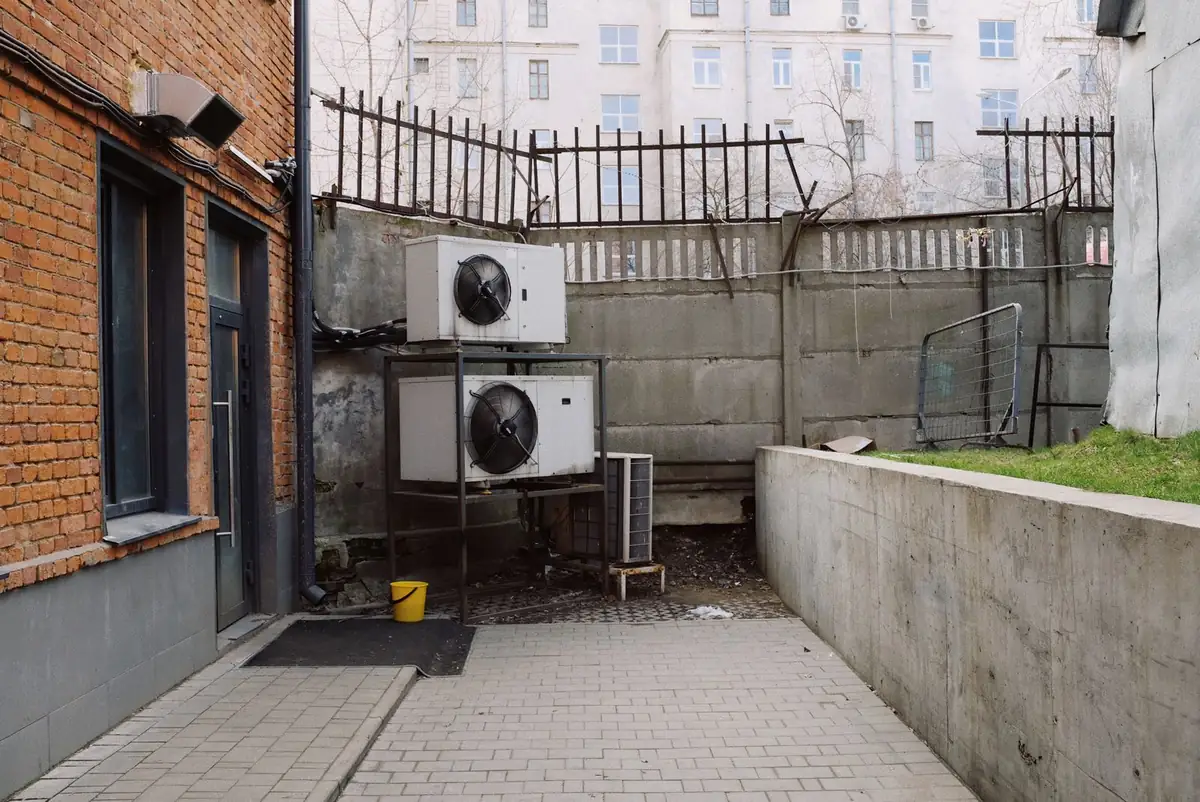
Ice on the lines or the indoor coil means the system cannot cool. Running it frozen can ruin the compressor.
At the thermostat. The fan moves warm house air over the ice.
Two to four hours. Put towels under the indoor unit for the melt.
A packed filter is behind about half of frozen coils. Change it now.
If the ice comes back within a day, there is a leak or a blower problem, and we should look.
Over 90 degrees outside, a house without cooling gets dangerous fast for some people.
Call now
A baby, an older parent, someone unwell or a pet left at home. We come nights and weekends.
Call now
Leave it off. Resetting it again can burn out the compressor.
Call now
An attic unit's pan has overflowed. Turn the system off.
Today or tomorrow
Often the capacitor. Usually a same-day fix.
Today or tomorrow
Follow the steps above, then book.
Book a visit
A tune-up usually finds a dirty coil or a weak part.
Aim for 40 to 50 percent indoors. Dry air at 76 feels cooler than damp air at 72.
Home and awake
Ceiling fans on in rooms you are in. They cool people, not rooms.
Out at work
Not off. A house that soaks up heat all day takes hours to pull back down.
Fan setting
On blows water off the coil back into the house between cycles.
| Installed | Refrigerant | What it means for repairs |
|---|---|---|
| Before about 2010 | R-22 | No longer made since 2020. What is left is expensive, so a leak usually means replacing |
| About 2010 to 2024 | R-410A | Still serviced. Repairs make sense through most of its life |
| 2025 on | R-454B or R-32 | The newer refrigerants, with a leak sensor inside the indoor unit |
About 15 to 20 degrees cooler than the air going into the return. Much less than that, and something needs a look.
West-facing windows, a long duct run or no return air in that room. We measure airflow room by room and tell you which it is.
We find the leak first. Topping up a leaking system is paying to let it out again.
Only the top, with a board, if leaves fall into it. A full cover traps damp and invites mice.
Call and tell us what you are seeing. Most cooling calls are fixed the same day.