Cats.
Kitten shots, yearly exams and a quiet waiting room of their own, away from barking. Indoor cats need care too.
Kitten shots
The usual schedule; your vet adjusts it at the visit. How old is your cat?
FVRCP #1. Upper respiratory viruses and panleukopenia.
FVRCP #2, FeLV. Leukemia, for cats that go outside.
FVRCP #3, Rabies. Indoor cats too; bats get in houses.
Boosters. Depends on indoor or outdoor life.
A calmer visit
- A carrier left out at home, so it is not scary.
- A towel over the carrier in the car.
- The cats' waiting room away from barking.
- An exam in or on top of the carrier, if they like.
- Treats unless your cat is fasting.
Cats hide it well
Cats are good at hiding pain and sickness. By the time a cat looks sick, it has often been sick for a while, which is why a yearly exam matters even for an indoor cat who never goes anywhere. Watch for changes, and any of these is worth a call:
Lilies are deadly to cats, even the pollen and the vase water. Keep them out of the house entirely, and call right away if a cat chews one.
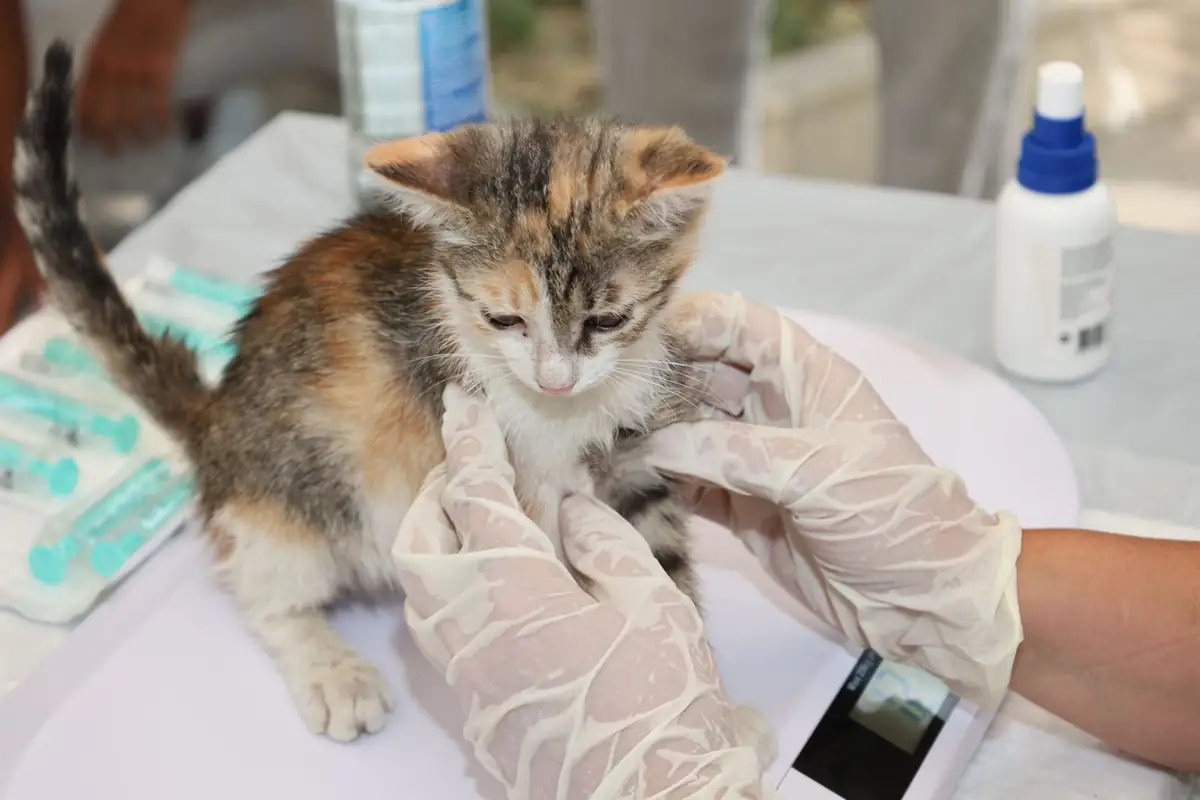
Kittens get three rounds of shots between six and sixteen weeks, a check for worms and fleas, and a talk about the spay or neuter at five to six months. Bring the kitten in a carrier lined with a towel; the first visit sets the tone for years.
Barn cats
Asked about cats
When should my cat be spayed or neutered?
Most cats at five to six months.
Does an indoor cat need rabies?
Yes. Bats get into houses.
Why does my cat need a dental cleaning?
Bad teeth hurt, and cats hide it.
Do you see rabbits too?
Yes, Dr. Cole sees rabbits and pocket pets.
Book a quiet visit.
Cats wait on their own side, away from barking.