Concept design by Medeiros Web Design. Level Best Foundation Repair is a fictional business.
Settling and sinking
Steel piers.
When the soil under a footing gives way, the only lasting fix is to carry the house on something that will not move. That is what a pier does.
How a pier goes in
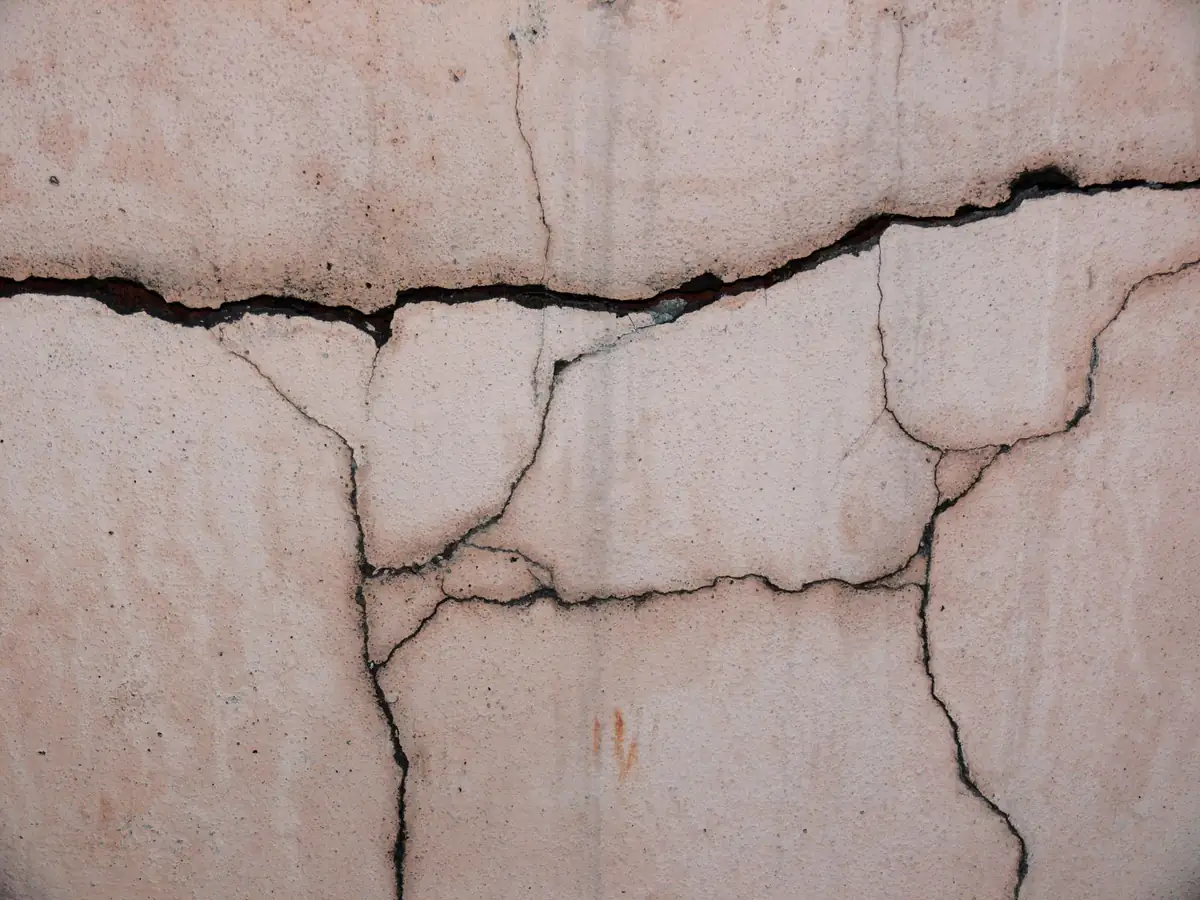
Signs a house is settling
- Outside
- Stair-step cracks in brick, wider at the top than the bottom. A chimney leaning away from the house.
- Doors and windows
- Doors that swing open by themselves or rub at one top corner. Windows that used to slide and now stick.
- Floors
- A marble rolls to the same wall every time. A gap opening between the floor and the baseboard.
- Inside walls
- Diagonal cracks running up from the corners of door frames.
- One corner or one side
- Settling is nearly always uneven. That is what does the damage.
Three kinds of pier
| Pier | How it works | Used for | Installed |
|---|---|---|---|
| Push pier | Pipe pressed down by the weight of the house | Most brick and two-story homes | About $1,400 each |
| Helical pier | A steel shaft with screw blades, turned into the ground | Light structures: porches, additions, frame houses | About $1,600 each |
| Slab pier | A pier set through a hole cored in the floor | The middle of a slab that has sunk | About $1,500 each |
Piers go every six to eight feet along the part of the house that has moved. Most homes need 6 to 10.
What three real-sized jobs cost
-
One corner
A garage corner that has dropped an inch. Four push piers and a day and a half.
About $5,600
-
One side
The whole back wall of a ranch house, settling toward a slope. Eight piers, three days.
About $11,200
-
Porch or stoop
A front porch pulling away from the house. Two helical piers and one day.
About $3,200
You get the pier count and a fixed price in writing after the inspection. It does not change once we dig.

Why not just fix the soil?
- Clay moves forever
- It swells when wet and shrinks when dry. No amount of watering or filling stops that.
- Mudjacking
- Pumping grout under a slab lifts it, but the grout sits on the same soil. Good for sidewalks. Not for a house.
- Concrete piers
- Short poured piers sit in the clay too. They are cheaper and move with it.
- Steel to rock
- Goes past the clay altogether. That is why the warranty can be for life.
While we work
- You can stay home
- Water, power and the furnace stay on. It is loud for a few hours a day.
- Day one
- Digging and brackets. Dirt goes on tarps, not on the lawn.
- Day two
- Piers driven. We log the depth and pressure of every one.
- Day three
- The lift, which takes about an hour. Then holes filled, plants reset and the site raked.
- Underground lines
- We have every utility marked before a shovel goes in.
Before the crew comes
Questions about piers
Will the house go all the way back to level?
We lift as far as the house lets us without doing harm. Often that is most of the way. Always, it stops sinking.
How deep do the piers go?
Until they reach rock or soil that will not give. Around Springfield, that is usually 12 to 30 feet.
Can a pier be adjusted later?
Yes. If any pier moves, we come back and re-lift it at no charge. That is the warranty.
Will my yard be wrecked?
No. Holes are dug by hand and filled the same week. Grass seed goes down, and in a month you have to look for them.
Find out how many, and what it costs.
The inspection is free, takes an hour and ends with a number in writing.