Concept design by Medeiros Web Design. Fieldhouse Furniture is a fictional business.
The shop.
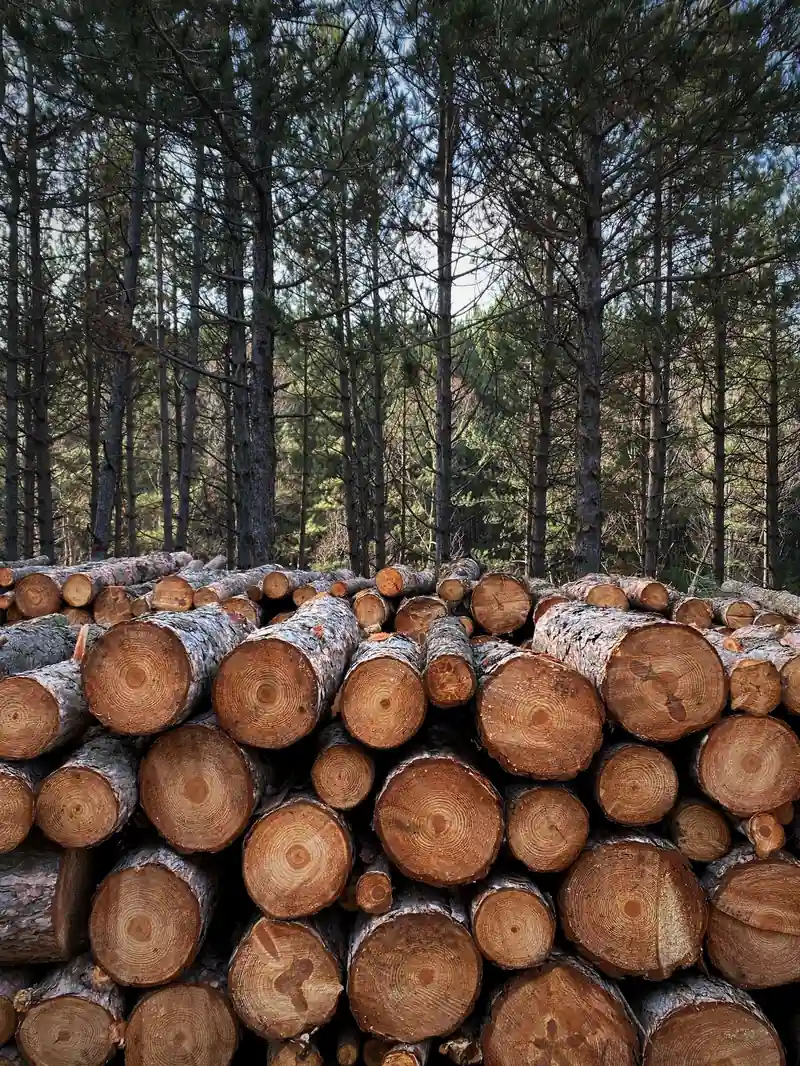
Six people, one old feed warehouse and a stack of hardwood that has been drying longer than some of us have worked here.
Page 2
Where the wood comes from
- Three sawmills
- Family mills in the Missouri Ozarks and north Arkansas, all within 200 miles. We have bought from one since the first year.
- We pick the boards
- Twice a month, somebody drives down and turns over every one. Straight grain for legs. Wide, quiet boards for tops.
- Dried twice
- Air-dried at the mill, then in a kiln to about seven percent. Then it rests in our shop for a month before a saw touches it.
- Whole logs when we can
- Boards cut one after another from the same tree match in color and grain. They are kept together.
- Nothing tropical
- No mahogany, no teak. Everything grew within a day's drive.
Five woods
| Wood | Color | Hardness | We use it for |
|---|---|---|---|
| White oak | Pale tan, turning honey with age | Very hard | Tables, chairs and beds. Most of what we build |
| Walnut | Chocolate brown, lightening a little over years | Medium | Tops, sideboards and anything meant to be looked at |
| Cherry | Pink at first, deep red-brown within two summers | Medium | Bedroom pieces and desks |
| Hard maple | Cream, staying pale | Hardest of the five | Sofa frames, drawer sides and butcher tops |
| Ash | Light, with a bold grain | Hard and springy | Chair legs and bent parts |
Four joints that hold it all
- Mortise and tenon
- A tongue on one piece fits a pocket in the other. In every leg, rail and chair back. It has held furniture together for four thousand years.
- Dovetail
- Wedge-shaped fingers that cannot pull apart. At every drawer corner, front and back.
- Drawbore pin
- A peg driven through a tenon, slightly off-line, pulling the joint tight for good. Look for the dots on our table legs.
- Breadboard
- The cross piece on the end of a tabletop. It keeps the top flat and lets it move.
Page 5
Why oil and wax, not lacquer
- You touch wood, not plastic
- Oil soaks in and hardens inside the grain. There is no film on top.
- It can be mended
- A scratch in lacquer means refinishing the whole top. A scratch in oil sands out in a minute.
- It ages well
- An oiled top gets deeper and glossier with every year of hands and waxing.
- Three coats of oil
- A day apart, each rubbed in by hand and buffed off. Then hard wax.
- The trade-off
- It wants a coat of wax each season, and a coaster under a wet glass.
Page 6
Who builds it
Two cabinetmakers
Tables, case pieces and beds. Each builds a piece from first board to last coat, and signs it underneath.
A chairmaker
Windsors and ladderbacks, with a shaving horse and a steam box in the corner.
Two upholsterers
One ties springs and one sews. Between them, a sofa takes four days.
One on the floor
Who answers the phone, drives the truck and knows where every swatch is.
The warehouse
- Built as a feed store
- Brick, with a freight door on the alley and a floor made to carry tons of grain. Now it carries lumber.
- Showroom in front
- About forty pieces on the floor at a time. Everything can be sat on, opened and leaned against.
- Shop in back
- Behind a glass door. You can watch from the showroom any day, and walk through on Saturdays.
- Offcuts
- Short ends become cutting boards and stools. Sawdust goes to a horse barn in Rogersville.
- Saturday at 11
- A twenty-minute walk through the shop, no booking needed. Closed-toe shoes.
How to judge any piece of furniture
In our showroom or anyone else's.
Asked about the shop
Is everything really made here?
Everything with our mark underneath. Hardware, fabric and leather come from suppliers. Lamps and rugs on the floor are from other makers, and labeled so.
How long has Fieldhouse been building?
Twenty-four years, which is why this is catalog number 24. One a year, every fall.
Can I watch my piece being made?
Yes. Come any Saturday, or ask us to send photographs at each stage.
Do you take apprentices?
One every two years. It is a four-year bench apprenticeship. Ask at the showroom.
Walk through on a Saturday.
Eleven in the morning, twenty minutes, sawdust included.