Driveways poured to last thirty years.
Four inches thick at the least, on compacted gravel, with rebar tied through every square foot. Most run $8 to $11 a square foot. Sample prices for this concept site.
What goes into ours
- Base. Four inches of crushed gravel, packed with a plate compactor until a boot heel leaves no mark.
- Thickness. Four inches everywhere, and five at the street end, since the trash truck turns there.
- Steel. Half-inch rebar tied in a two-foot grid and set on chairs, so it sits in the middle of the slab.
- Mix. A 4,000 pound mix with air in it. The air is what lets concrete live through a Missouri freeze and thaw.
- Joints. Saw cut every ten feet the morning after the pour, a quarter of the slab deep.
- Cure. Kept wet for the first week. Slow curing makes a hard top.
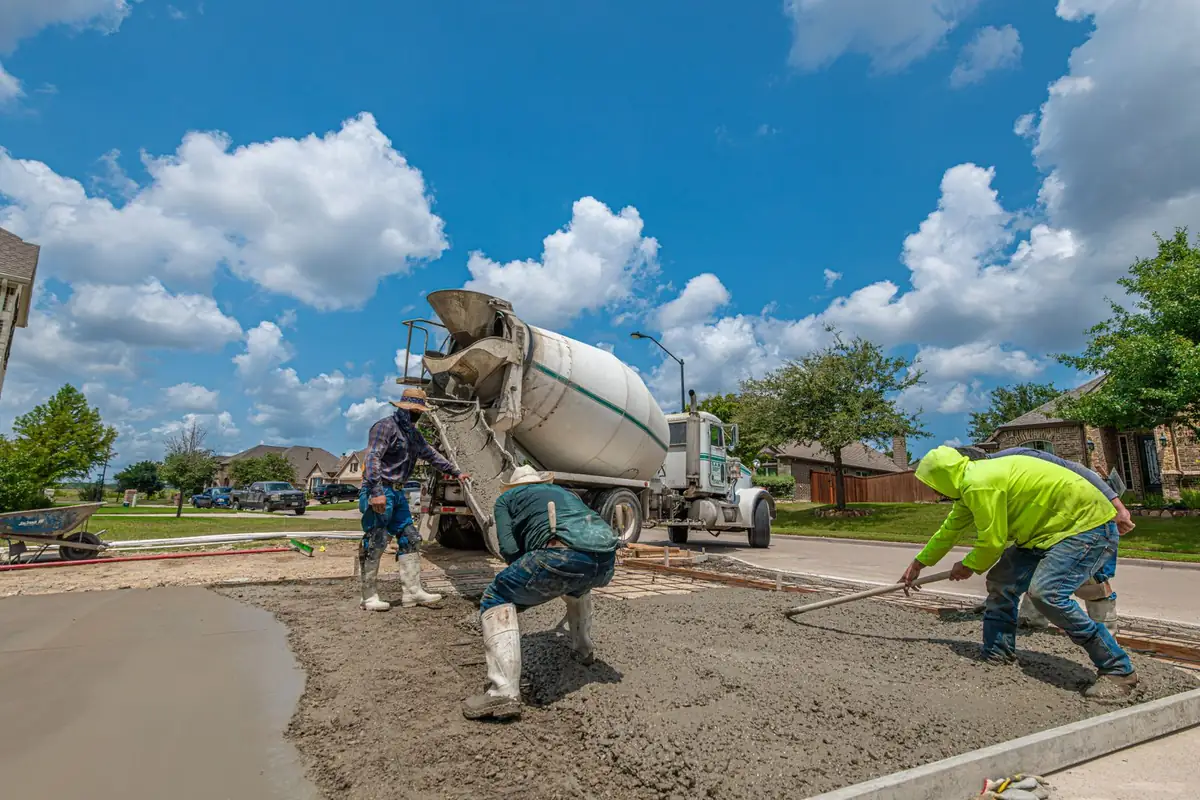
Prices by size
| Driveway | Size | Square feet | Usual price |
|---|---|---|---|
| One car | 10 by 40 feet | 400 | $3,200 to $4,400 |
| Two car, short | 20 by 24 feet | 480 | $3,840 to $5,280 |
| Two car, long | 18 by 60 feet | 1,080 | $8,640 to $11,880 |
| Turnaround pad | 12 by 20 feet | 240 | $1,920 to $2,640 |
The price covers the gravel base, forms, rebar, concrete, a broom finish and the saw cuts. A flat, open lot lands at the low end. A slope, a long wheelbarrow run or a tight gate lands at the high end.
| Extra | Price |
|---|---|
| Tear out and haul off an old driveway | $2 a square foot |
| Exposed aggregate finish | $2 a square foot |
| Stamped border, one foot wide | $5 a square foot of border |
| Five inches thick all over | $0.75 a square foot |
| Sealing after 30 days | $0.60 a square foot |
| Culvert pipe at the road | $450 |
Three days of work, a week of waiting
A driveway takes three working days. Then it needs a week before a car goes on it.
- Day 1 Tear out and grade
- Day 2 Forms, rebar, inspection
- Day 3 Pour and finish
- Day 10 Park cars on it
Trucks, campers and loaded trailers wait the full 28 days from the pour.
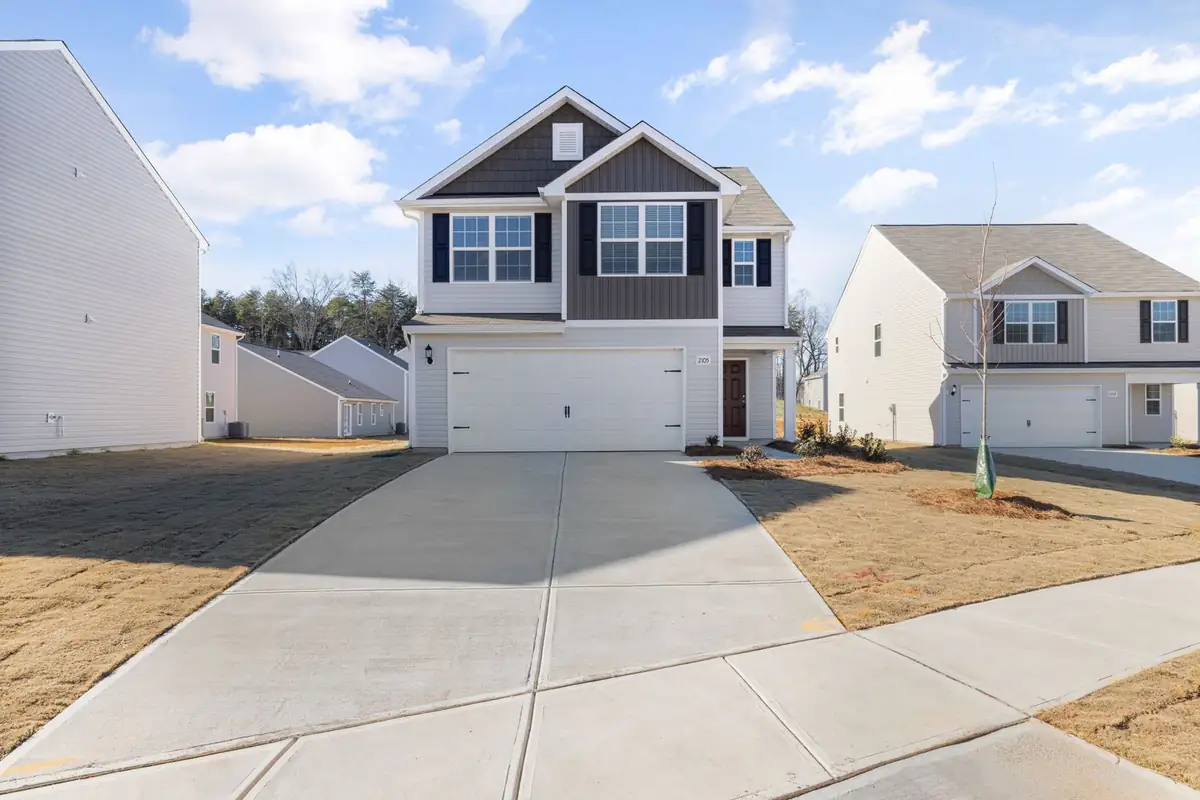
Slope, water and the street end
- Slope. An eighth of an inch per foot, away from the garage. Water runs off, and nobody notices the tilt.
- Against the garage. A strip of expansion joint, so the driveway and the garage floor can move without pushing on each other.
- The street end. Inside city limits the approach needs a permit. We pull it, and the fee of $40 to $75 goes on the bill at cost.
- Ditches. On a county road with a ditch, a culvert pipe goes under the driveway, sized by the road district.
- Trailers and boats. Tell us what parks there. A turnaround pad costs far less poured with the driveway than added later.
Before we come to measure
Ten minutes with this list and the estimate is right the first time.
Asked about driveways
Concrete or asphalt?
Asphalt costs about half as much to put down and needs sealing every three years. Concrete costs more once, then mostly gets left alone for thirty years. On a slope that gets ice, a broom finish grips better.
Can you widen the driveway I have?
Yes. We drill rebar pins into the edge of the old slab so the new strip cannot settle away from it. The new concrete will look lighter for two or three years.
Gravel now, concrete later?
That works well. A gravel driveway that has been driven on for a year is a packed base. We grade it, add what is missing and pour.
When can I park on it?
Cars after seven days. Trucks, trailers and the delivery van after 28.
Get a price for yours.
Travis measures, asks what parks on it and sends a written price within two days. Estimates are free within 30 miles of Clever.