From the estimate to the first car.
Seven steps, about three weeks from a yes to a finished slab. Most of that time is waiting on utility marks and weather. Here is each step.
The seven steps
- Estimate. Travis measures and asks what the slab has to carry. A written price follows within two days and holds for 60.
- Utility marks. We call 811. Gas, power, water and cable are painted on the ground within three working days.
- Tear-out. Old concrete is broken up and trucked to a crusher, where it becomes road base.
- Base. The ground is cut to grade. Four inches of gravel goes down and gets compacted.
- Forms and steel. Boards are staked to the finished height, and rebar or wire is tied and set on chairs. The city inspects if it is required.
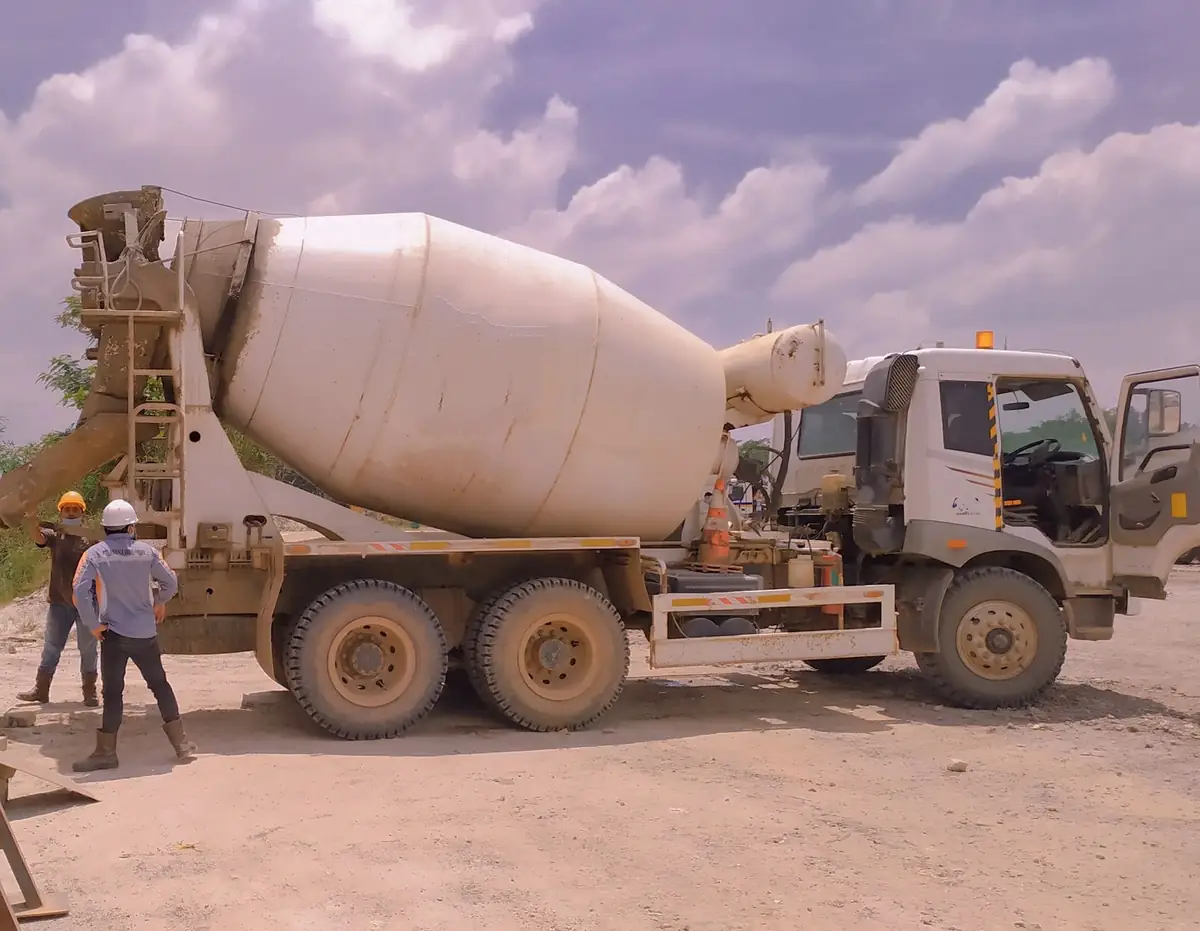
- Pour. Trucks roll at 6:30 AM. The slab is placed, leveled, floated and finished before lunch.
- Cut and cure. Joints are sawed the next morning. The slab is kept wet for a week.
Pour day, hour by hour
- 6:30. The first truck backs up to the forms.
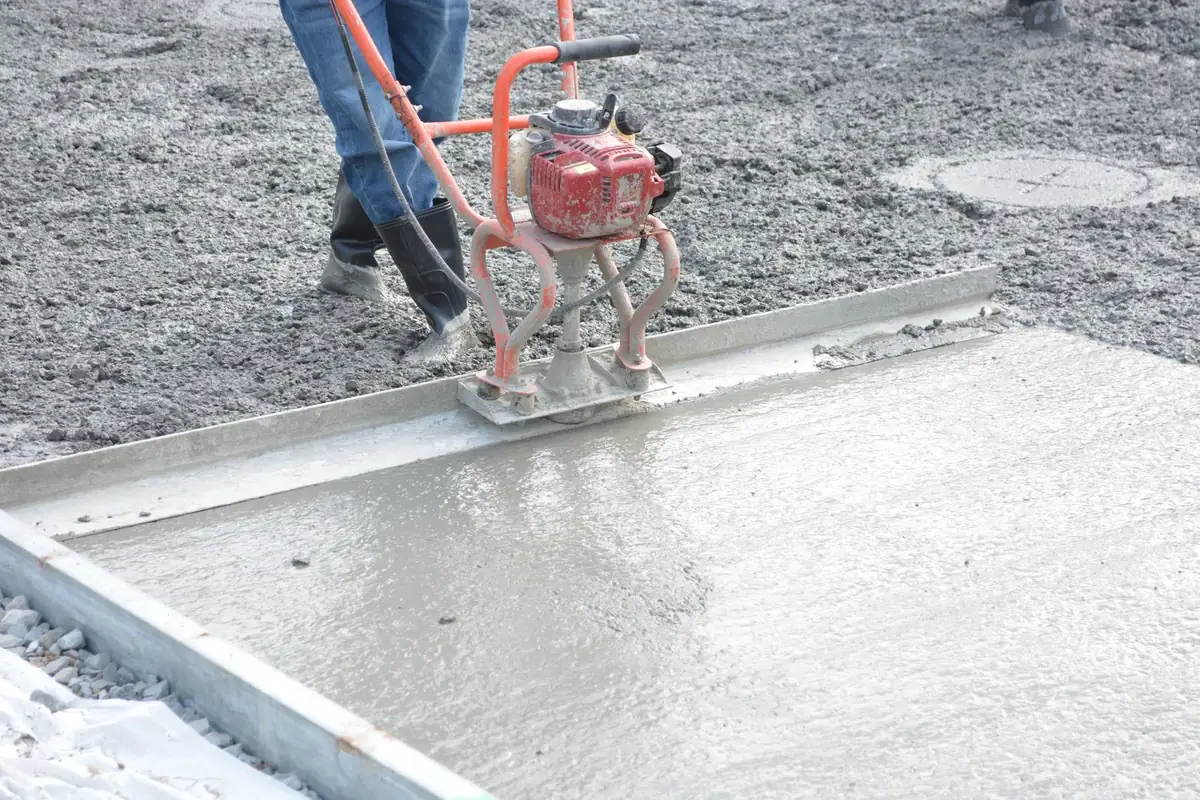
- 7:00. Concrete is raked into place and leveled with a screed.
- 8:00. A float pushes the gravel down and brings the cream up. Edges are rounded.
- 9:30. We wait. The slab has to lose its wet shine before it can be finished.
- 10:30. Broom, trowel or stamps, depending on what you picked.
- Noon. Curing begins, under spray, wet blankets or plastic.
Weather calls
| Weather | What we do |
|---|---|
| Below 40 degrees | No pour, unless the slab can be covered with insulated blankets for three days |
| Above 90 degrees | Start at 5:30 AM, with a mix that sets slower |
| Heavy rain in the forecast | The pour moves to the next dry day, at no charge |
| A shower after finishing | Plastic goes over the slab. We keep it on the truck |
| Wind over 20 miles an hour | Curing spray goes on early, since wind dries the top too fast |
The pouring season runs March to November. Winter is for estimates, and the spring list fills in February.
The five-year warranty, in plain words
Covered
- A crack that opens wider than a quarter inch
- One side of a crack or joint lifting higher than the other
- The surface flaking or popping off
- Settling of more than an inch
Not covered
- Hairline cracks, which nearly all concrete gets
- Damage from deicing salt
- Loads heavier than the slab was built for
- Tree roots, and ground washed out by a broken pipe
It is written on the invoice, and it goes with the house if you sell.
Who pours it
Travis Keel finished concrete for a Springfield builder for twelve years before starting Solid Ground in 2017. He is on every pour, with the same crew of four.
- One job at a time. The crew does not leave yours half formed to start another.
- Insured. Liability and workers' compensation. Ask, and the certificate is emailed the same day.
- Paid in two parts. Nothing down. Half on pour day and half when the forms come off.
- A clean yard. Ruts along the forms are filled with topsoil and seeded, and the street is swept.
The night before the pour
Five small things that keep pour day on time.
Asked about the process
How far ahead are you booked?
Four to six weeks in spring, two to three in late summer and fall. A small pad can often be fitted in on the same day as a bigger pour nearby.
Will the truck tear up my yard?
The truck stays on the street or the old driveway. Concrete goes the rest of the way by wheelbarrow, or by pump for $450 when it is far or uphill.
Do I have to be home?
For the first half hour, to walk the forms with Travis and agree on heights and edges. After that, no.
Do you repair concrete?
We replace bad sections, one panel or more, from $600. We do not do crack filler or slab lifting, and can give you the name of a company that does.
Start with a free estimate.
Weekday evenings and Saturday mornings, within 30 miles of Clever. The office answers 7 AM to 4 PM, Monday to Friday.